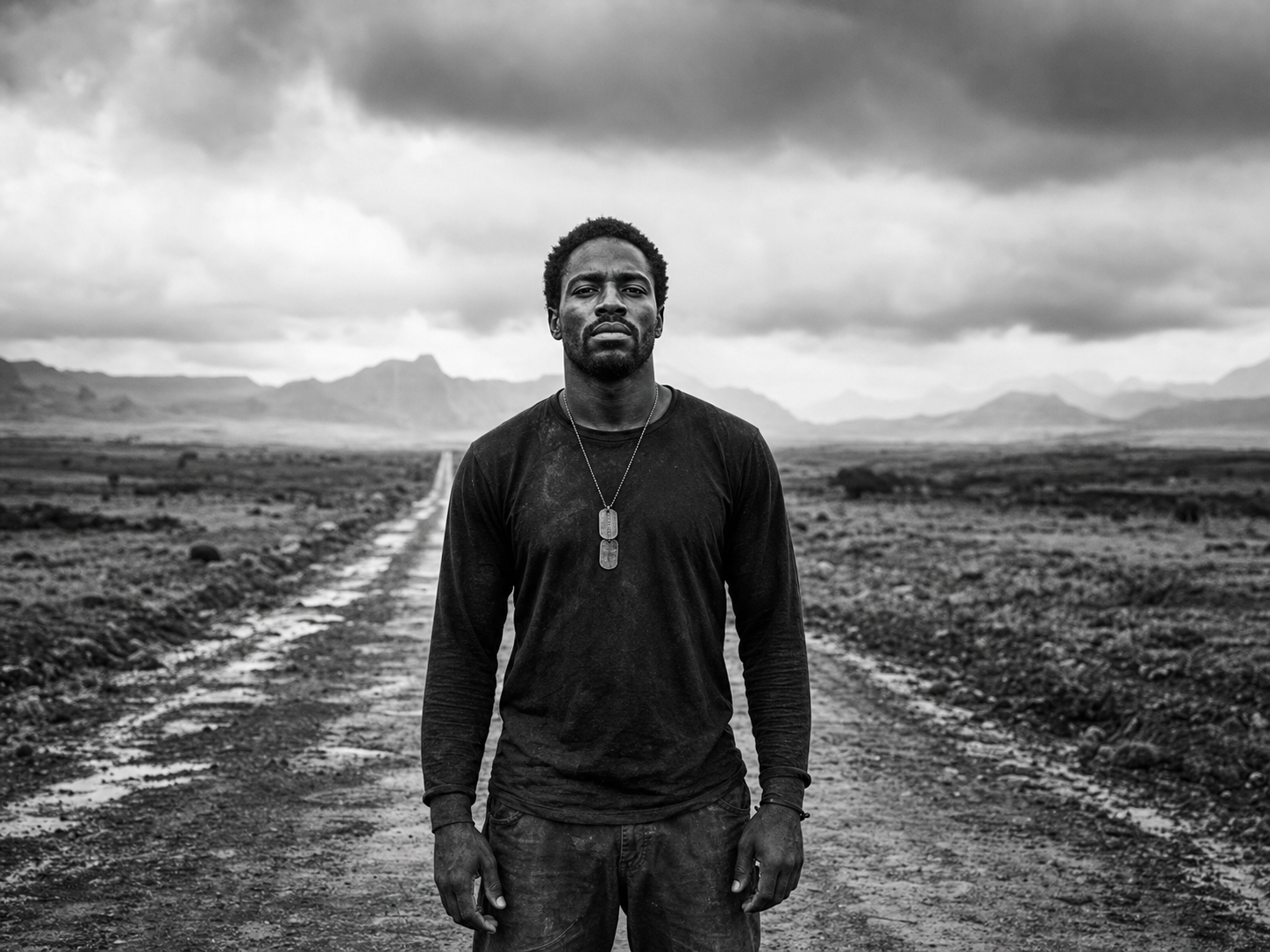

The paperwork ended on a Tuesday. Or a Friday. Or whatever weekday it was for you — the day the last signature came back, the last locker got emptied, the last handshake landed a little too firmly and a little too fast. Somebody said thank you for your service. Somebody handed you a folder. And then the door closed behind you and the world outside was the same world it had always been, except now you were walking into it without the uniform.
For a lot of us, that was the day we thought the mission ended.
It did not.
The uniform came off. The mission did not. The mission just changed shape — the way missions always do when the environment changes — and the standards you built inside the wire came with you, whether you noticed it or not. You did not stop being vigilant on the day you walked out. You just started applying vigilance to a different problem set.
The scan never turned off
Sit in a coffee shop with a room full of civilians and watch what you do. You take a seat with your back to a wall. You clock the exits before you clock the menu. You notice the guy who came in a minute after you, the one who has not looked at the coffee once. You notice the mother with the two kids and the one who is about to bolt for the door if she does not intervene. You notice everything. All of it. All at once. It is running in the background the way it always ran, and the only difference is nobody is going to give you a ribbon for it anymore.
That scan did not turn off.
The service put it in you. Years of it. Every rotation, every training cycle, every long quiet night on watch where the whole game was noticing the thing that was one degree off from the thing that had been there the night before. The scan became the way you saw the world. It is still the way you see the world. The service did not give you a temporary skill. It gave you an operating system. That operating system does not come with an off switch.
Some of us feel that as a burden. The constant threat modeling. The mental map of every room. The way your shoulders tighten in a crowd for reasons you cannot articulate to the people you love. It is easy to hear all of that as damage — as something that should be turned off, eased down, softened out.
It is not damage. It is a trained capacity. It is one of the most valuable things you own.
Standards do not clock out
There is a moment I want you to picture. You are at a grocery store. It is a Tuesday afternoon. You are pushing a cart down aisle six looking for a specific brand of coffee. There is a puddle on the floor in front of the freezer case. An older man, maybe seventy, maybe more, is walking toward it and looking at his phone. Nobody else in the aisle has noticed.
What do you do?
You already know what you do. You do not think about it. You move. You get to the puddle before he does. You put yourself between him and the slip. You catch his eye and you say something like watch your step, sir, they have not cleaned that up yet. He nods, thanks you, keeps walking. Twelve seconds. You do not tell your spouse about it when you get home. You do not think about it again.
But that twelve seconds was the whole mission.
The mission is not always big. The mission is not always in a valley in Helmand or on the deck of a ship or at a joint operations center at three in the morning. Sometimes the mission is a puddle in aisle six. Sometimes the mission is calling the friend nobody else called. Sometimes the mission is standing between an older man and a wet floor for twelve seconds on a Tuesday. It is still the mission. You are still the person the service made you. You still moved before you thought about it. That is vigilance. That is the standard. And the standard did not clock out.
How you carry yourself is the standard
Somebody is always watching. That is not a threat. It is a fact. Your kids are watching you tie your boots. Your neighbors are watching how you handle the mailman. The new hire at your job is watching how you talk to the guy who is having a bad day. The stranger in the parking lot is watching whether you return the shopping cart to the corral or leave it wedged between two parked cars.
None of them are grading you on a form. None of them are going to write it down. But every one of those little moments is a rep in the standard you are setting for the people around you, and the people you love, and the people who are about to have to figure out who they want to become and are looking at you to see one possible answer.
The service taught you that standards are not the loud thing. Standards are the quiet thing. The uniform pressed the same way every morning. The boots blackened the same way every night. The bunk squared away when nobody was going to inspect it, because you were going to inspect it. Standards are the sum of a thousand small refusals to slide, in a thousand small moments nobody sees.
You did not lose that when the uniform came off. You just started applying it to a bigger inspection.
Vigilance is a gift, not a wound
The world outside the wire has spent a lot of years telling veterans that the things the service put in us are things we should be trying to unlearn. That the scan is hypervigilance. That the standards are rigidity. That the way we carry ourselves is trauma looking for an exit.
Some of it is. Some of it is real and it deserves real help and we should never confuse discipline with hiding from what we need to work on. But most of it — most of what the service put in us — is not damage. It is a trained capacity that most of the civilian world does not have and does not know how to build. It is a gift. It is the reason you notice the puddle. It is the reason you check the door. It is the reason the young mother in the parking lot at eleven o'clock at night with a stroller and no help is going to leave that parking lot safe, because you are in it too and you have already scanned the whole thing and you are already positioned.
Every community needs people who never turn the scan off. Every community needs people whose standards do not clock out. Every community needs people the mission never released. That is you. That is us. That is what we are for.
The uniform came off. The mission did not. The service gave you vigilance. Keep it sharp. Keep it useful. Keep it turned toward the people who need it.
You are still on duty. Act like it.